
Look at the Book
Detalls del Canal
Look at the Book
Look at the Book is John Piper's ongoing series of 8-12 minute videos to help you learn to read the Bible for yourself.
Episodis Recents
1359 episodis
Understanding Paul Is Understanding the Word of God: 1 Corinthians 1:1–3, Part 1
When Paul writes to the Corinthians, he writes as a man who once persecuted the church, who then encountered Christ, and who now writes the words of G...

The Heart of the Matter: Fearless Love from True Faith: Philemon 1–25
When Philemon walks away from Paul’s letter, what kind of response does Paul want to see — mere compliance or a heart full of faith in God’s promises?

Fellow Workers Full of Grace for Philemon: Philemon 23–25, Part 2
What do Mark, Aristarchus, Demas, and Luke have to do with Philemon and his runaway slave? Paul shows Philemon what gospel-shaped friendships look lik...

Epaphras: Founder, Pastor, Prisoner, Greeter: Philemon 23–25, Part 1
Alongside all the other ways Paul encourages Philemon to love, he also adds greetings from Epaphras, a man Philemon would have deeply respected.

Paul’s Paradoxical Way of Being Refreshed: Philemon 18–22
In seeking a welcome for the runaway slave, Onesimus, Paul banks on his history with Philemon, and risks his own resources, modeling radical Christian...

Can We Always Know the Purposes of Providence? Philemon 15–17, Part 3
Reading God’s providence rightly takes great faith in the power and wisdom of God, and communicating it kindly takes great humility. Paul displays bot...

How the New Testament Transformed Slavery: Philemon 15–17, Part 2
While the New Testament never explicitly abolishes slavery, it is full of teachings and commands that revolutionized the master-slave relationship.

Receive Onesimus No Longer as a Slave but as a Brother: Philemon 15–17, Part 1
Paul wanted Philemon to welcome Onesimus back — but did it matter how? Paul’s radical reasoning has big implications for Onesimus’s status as a slave.

How to Motivate Without Commanding: Philemon 8–14, Part 4
Although Paul refuses to command Philemon, he strengthens his appeal with seven personal reasons why his dear friend should receive Onesimus like a br...

Does Commanding Ever Serve Love? Philemon 8–14, Part 3
Jesus commanded us to love one another, but Paul seems to imply that commanding diminishes love. So, which does love prefer — commands or appeals?

Why Does Not Commanding Serve Love? Philemon 8–14, Part 2
Paul knows what he wants Philemon to do, but he chooses not to command it. Why? He wants something deeper than rote obedience: genuine love.

Faith Is the Freedom to Love: Philemon 8–14, Part 1
Paul could have commanded Philemon, with all the force of an apostle, to treat his runaway slave with love. So, why does Paul prefer to appeal to Phil...

The Ripple Effect of Christian Refreshment: Philemon 4–7, Part 2
How does Christian love touch and refresh all our relationships? Springing up from personal delight in Jesus, love overflows to do good to others for...
The Saints Are Refreshed and Christ Is Glorified: Philemon 4–7, Part 1
Why does Paul think of Philemon as the sort of man who would welcome back a runaway slave? Because he has heard of Philemon’s refreshing faith.
Why Is It Right to Read a Personal Letter to Philemon? Philemon 1–3, Part 2
When Paul wrote to Philemon on a personal matter, he intended the entire church — including us — to receive grace and peace through his words.

Who Was the Apostle Paul? Philemon 1–3, Part 1
Paul is an apostle of Jesus Christ, with all the authority that commission entails. But as he writes to Philemon, he approaches as a friend.
What Is the Letter to Philemon About? Philemon 1–25
Why did Paul write his letter to Philemon? A delicate matter between a master and his slave becomes teaching that nourishes the worldwide church.
The Final Words and Main Theme of Paul’s Letter to Titus: Titus 3:12–15
A strong message rings through Paul’s letter to Titus like the toll of a great bell: Let Christians devote themselves to good works in the grace of Go...
Unprofitable Controversies and Those Who Cause Them: Titus 3:8–11, Part 2
When good doctrine produces good works, the church flourishes — but dissent and controversies cause division. That worthlessness needs to be stopped.
How the Gospel Serves Excellent Deeds: Titus 3:8–11, Part 1
God’s message of salvation is utterly trustworthy. But what should his promises produce in those who have received them by faith?

How Spectacular and Satisfying Is Eternal Life? Titus 3:4–7, Part 8
By justifying us through Christ’s blood, God has made us heirs of eternal life. But what is that life, and why does it matter?
Justified by Grace in Hope of Eternal Life: Titus 3:4–7, Part 7
When we think of God’s grace in salvation, how does justification by faith lead to our adoption as children of God and the gift of eternal life?
How We Experience the Rich Outpouring of the Holy Spirit: Titus 3:4–7, Part 6
When the Bible tells us to be renewed, how is that supposed to happen? The Holy Spirit works in us to make us taste and enjoy God’s great love for us.
Does ‘Washing of Regeneration’ Refer to Baptismal Regeneration? Titus 3:4–7, Part 5
Does regeneration come from washing, or does washing come from regeneration? When God gives us new life, he also makes us clean by his power.

Why Can’t Our Good Works Save Us? Titus 3:4–7, Part 4
Why do our good works in Christ please God when even our best works outside Christ added to our guilt? John Piper explores the insufficiency of works...
Don’t Miss the Diamonds in the Chest of Salvation: Titus 3:4–7, Part 3
Mercy, regeneration, justification, grace, inheritance, hope, eternal life — salvation is full of wonders for us to study and enjoy.
Saved from What? Titus 3:4–7, Part 2
For Christians, the word “saved” is so common that we might easily overlook its sobering implications. From what danger did God rescue us?
What Kind of God Was There Before Creation? Titus 3:4–7, Part 1
The God who devised the plan of salvation through Jesus’s life, death, and resurrection must be a certain kind of God. Come and see his kindness.

Paul’s Despicable History: Titus 3:3
God’s mercy shines all the brighter against the darkness of our sinful past, when our rebellious desires drove us into every kind of malice and envy.
Can a Gentle, Meek, Non-Combative Person Rebuke? Titus 3:1–2, Part 2
A Christian’s meekness comes not from a certain disposition but from the Holy Spirit — the same Spirit who sometimes moves us to rebuke.
Christians Go Beyond Compliance: Titus 3:1–2, Part 1
Because of the redemption Christ has accomplished, we are free to submit without fear to human rulers as we pursue the good works God has given us.
Pastor, Let No One Disregard You: Titus 2:11–15, Part 6
The church needs pastors through whom the word of God overflows in everyday speech, including in words of exhortation and authoritative rebuke.
Pardoned to Be Passionate for Good Deeds: Titus 2:11–15, Part 5
When Christ gave himself for our sake, what did he accomplish? His redeeming work breaks the power of sin and purifies us so that we belong to him.
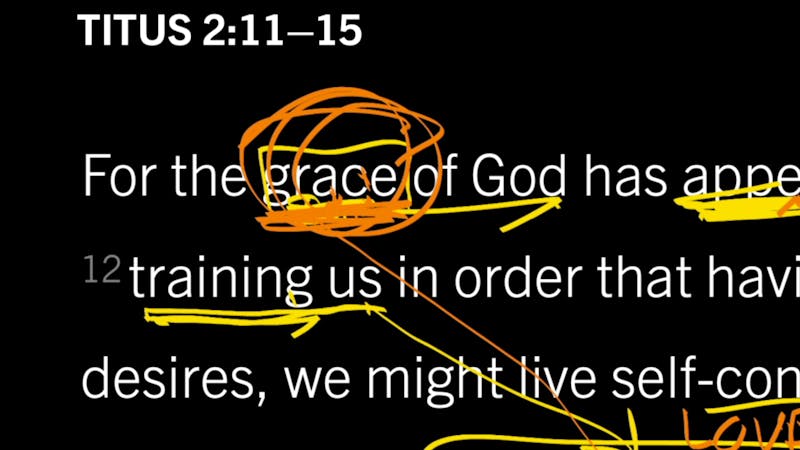
Eagerly Awaiting Our Gladsome Hope: Titus 2:11–15, Part 4
Jesus’s second coming is supposed to be our greatest hope. But what is it about that hope that should make us wait so eagerly?
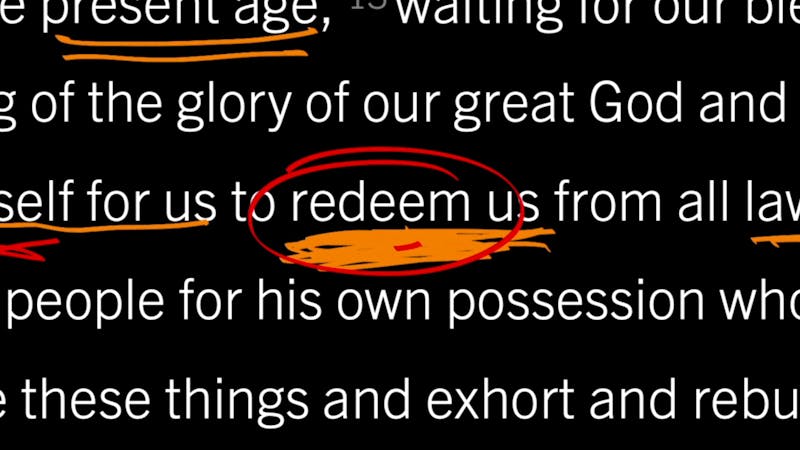
What Are Worldly Desires? Titus 2:11–15, Part 3
How do we know the difference between a godly desire and a worldly desire? A godly desire will only grow sweeter as our desire for God grows.

What Makes the Training of Grace Christian? Titus 2:11–15, Part 2
The training regimen of grace goes deeper than moral imperatives — “Do this” and “Do that.” God’s grace trains us to start and end at the cross of Chr...

What Is the Grace of God? Titus 2:11–15, Part 1
Where does grace start, and where does it go? Before all ages, God planned to save us by his grace and to make us holy through that same power.
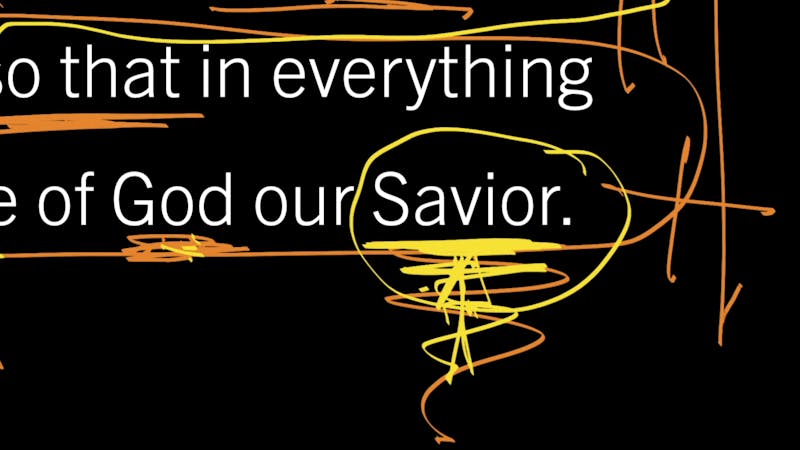
How Slaves Beautify Their Salvation: Titus 2:9–10
In the most vulnerable places in society, God has called believers who will make his salvation beautiful through their submission, diligence, and joy.

Set an Example of Incorruptible Teaching: Titus 2:6–8
What could be more important for young men than self-control? Paul finishes his instructions to various generations with a word to young men and Titus...
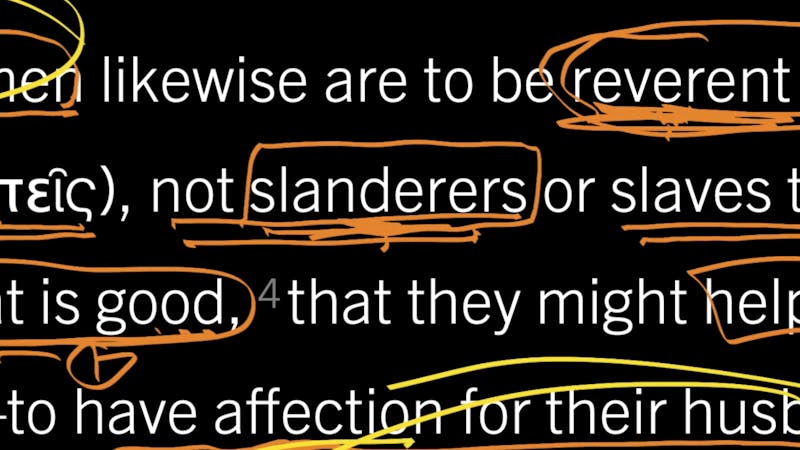
How Older Women Help Younger Women Live for the Word of God: Titus 2:3–5
What does love for the word of God look like for women in various stages of life? By God’s design, older women can guide younger women in Christ’s way...